

Why is ESG important for e-commerce?
The online electronics trade (e-commerce) is experiencing dynamic development, but its future will depend on its ability to meet new demands for sustainability and responsibility. ESG (Environmental, Social and Governance) standards are no longer ‘value adds’ – they are part of the new business norm.
Why is ESG reporting mandatory for online electronics retailers?
With the introduction of new European and international regulations, online retailers will have to:
- Report their impact on climate and resource conservation, including reporting on the return and recycling of their products and packaging.
- Show social responsibility throughout the supply chain.
- Apply good governance practices and transparency.
EU CSRD requires more companies to report on ESG from 2025.
The new ESG requirements extend even to medium-sized online stores, especially if they work with international partners.
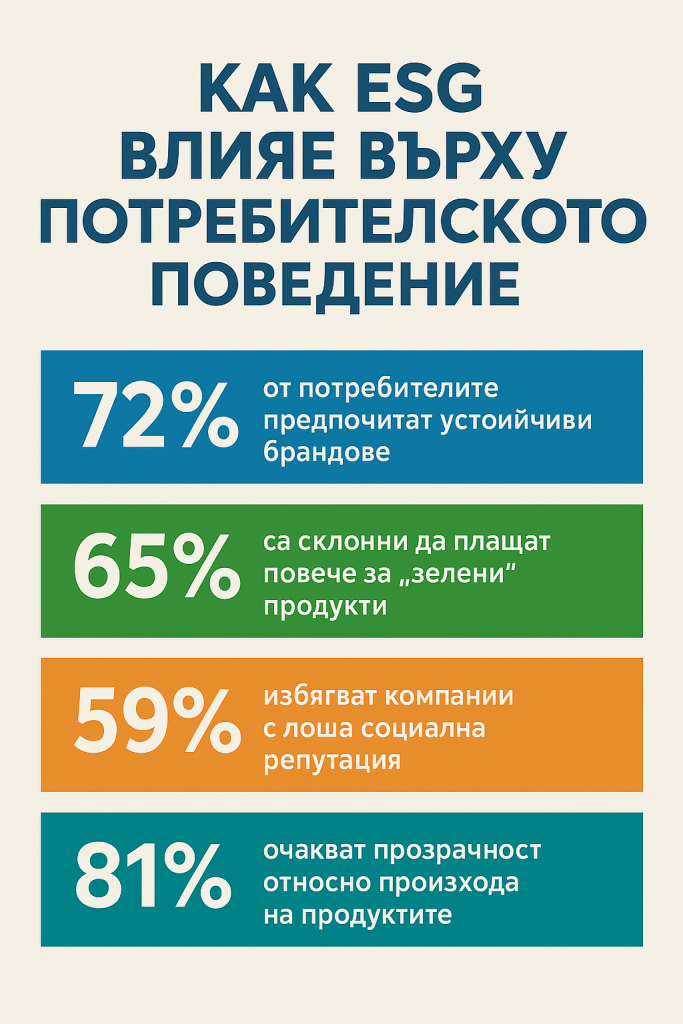
Infographic: How ESG influences consumer behaviour
In recent years, consumers are increasingly choosing to shop not only on price and quality, but also on the values of the brands they support. ESG (environmental, social and corporate governance) is no longer just a topic for investors and regulators – it affects every stage of customer behaviour, especially in online commerce. Companies that demonstrate sustainable and ethical practices earn not only the trust but also the loyalty of the modern consumer.
Online trading of electronic consumer products is no exception. In this fast-growing sector, ESG practices now play a role not only in reputation but also in actual sales. Buyers expect more than fast delivery – they want guarantees of ethical sourcing, environmental commitment and transparency throughout the chain.
Here’s what the latest data shows:
- 72% of consumers prefer sustainable brands
- 65% are willing to pay more for “green” products
- 59% avoid companies with a bad social reputation
- 81% expect transparency on the origin of products
- 71%demand to receive services to return and recycle their unwanted products
- 77%want to return or recycle the packaging of the products received
Here are some examples from practice:
- A customer choosing between two identical smartphones is more likely to choose the one that comes with recyclable packaging or a redemption option.
- An online store that offers information about sustainable laptop manufacturing or the opportunity to return and recycle old devices builds trust and loyalty.
- A company that shows social commitment (e.g., involving local recyclers, creating programs to reuse machinery) gains a positive image in the eyes of consumers.
For online retailers of e-consumer products, these figures represent a real opportunity to build competitive advantage by integrating sustainable and transparent practices into their operations.
What are the global trends in ESG reporting for the online electronics trade?
The world is moving towards transparent, responsible trade. Some of the leading trends include:
- Climate neutral platforms – Amazon, Apple and others announce net-zero targets
- Circular economy – recycle, repair and reuse
- Electronic ESG reports – automation and digitalization of the process
- Supply chain traceability – technologies such as blockchain to ensure chain sustainability
Timeline: key regulations affecting e-commerce
With increasing pressure for sustainability and transparency, online retailers of consumer electronics are facing a new wave of regulations that are not only changing the way they operate, but also defining the future of the entire sector. Below, we provide a chronology of the most important European and global initiatives that will shape the ESG landscape in the coming years. Knowing them is key to preparing in time and building a competitive advantage.
See the deadlines and obligations of e-commerce traders in this table:
| Deadline | Event / Regulation | Impact on e-commerce |
|---|---|---|
| 2023 | Adoption of the CSRD (Corporate Sustainability Reporting Directive) in the EU | It expands the scope of ESG reporting – no longer just for large corporations. Online retailers and manufacturers will have to report on environmental and social risks, including carbon emissions, human rights and supply chain management. |
| 2024 | Introduction of standardised ESG indicators (EFRAG) | The European Financial Reporting Group is developing specific sustainability metrics. All companies will have to use uniform formats for their ESG reports – important for online shops that work with external investors or suppliers. |
| 2025 | First mandatory ESG reporting for mid-sized companies | Companies with more than 250 employees, EUR 40 million turnover or EUR 20 million assets will be covered by the CSRD. Consumer electronics retailers that meet these criteria will file annual reports with structured ESG information. |
| 2026 | Entry into force of the Digital Product Passports (DPP) Regulation | Every product (especially electronic) will have to have a digital passport with data on origin, materials, reusability, reparability and recyclability. Manufacturers and online retailers have a duty to make this information available before sale. The roll-out is expected to start with electronics, batteries and textiles. |
| 2026-2030 | Expected introduction of global standards (e.g. ISO 26000, GRI Standards) | Harmonisation of international practices is expected – particularly important for online retailers selling in more than one country. ESG integration into management, procurement and logistics systems will be required. |
Ready to assess your business’ ESG readiness?
Download our free ESG self-assessment checklist!
This PDF will help you quickly and easily understand:
- To what extent do you comply with future regulations
- What are the essential important areas for your company
- Where are your main strengths and weaknesses
- What steps to take right now
Want to prepare yourself professionally?
Contact the ESG DIRECT team – we’ll help you integrate sustainability into every step of your online business. Call +359876121223 or use the button below.